Origami Portrait AI Prompt: Turn Photos into Paper Art Characters
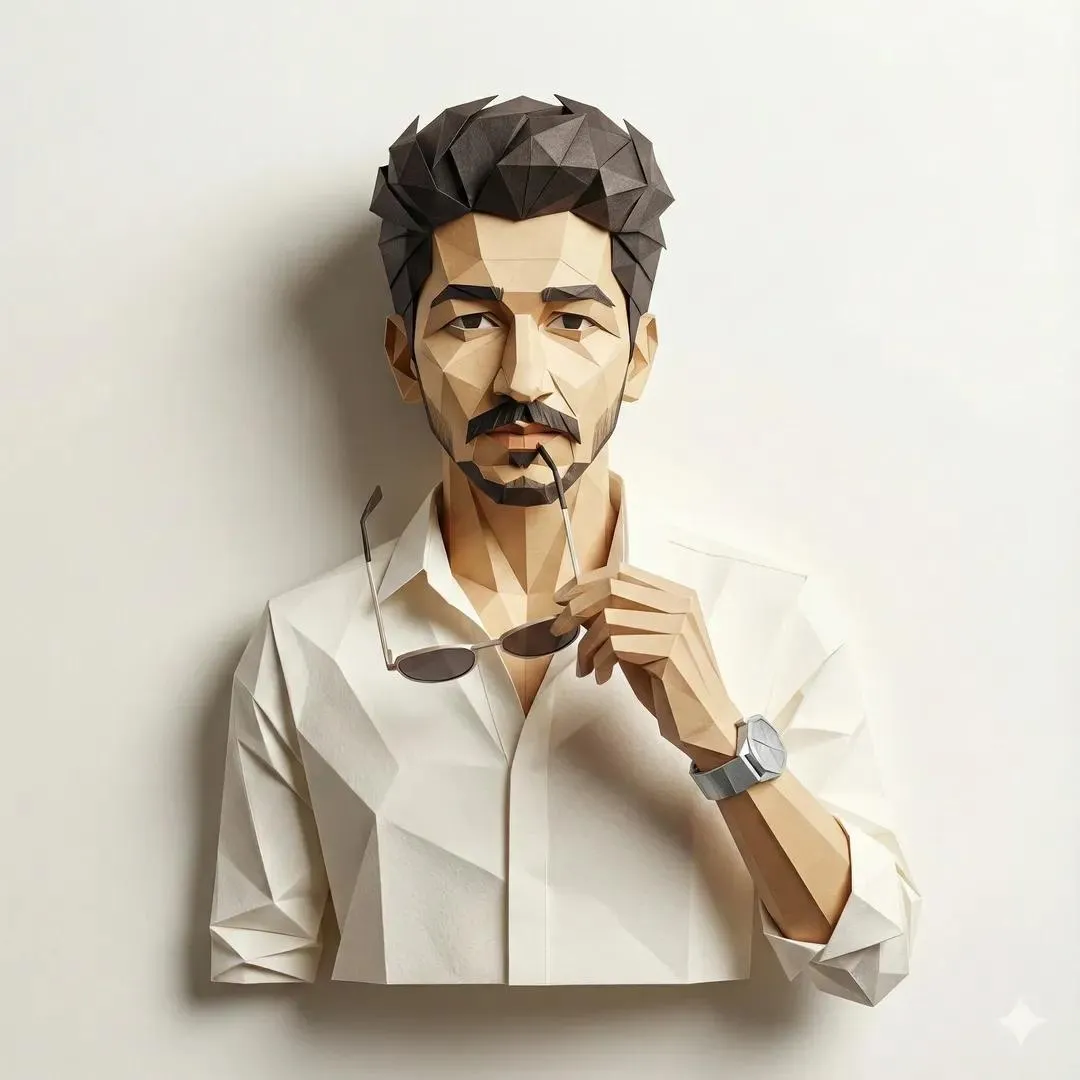
This AI prompt transforms portrait photos into hyper-realistic origami-style paper art with crisp geometric folds, realistic paper texture, and matching color palettes.
Generated Images

The Prompt
A hyper-detailed origami-style version of me same to same from the uploaded image , folded from high-quality paper with crisp, clean edges and realistic paper texture. Intricate geometric folds capture the character’s iconic shape and expressions. Use the same color palette as the reference photo (no black). Place it on a clean studio surface with soft, natural shadows. Minimalist collectible art aesthetic, ultra-photorealistic, 1080×1080 square.
How to Use
1. Upload your portrait photo to your AI image generator. 2. Copy and paste this origami prompt. 3. Make sure your generator references your uploaded image properly. 4. Generate to create a paper art version of your photo. 5. For different results, adjust 'high-quality paper' to specific types like 'kraft paper' or 'metallic foil'.
Prompt Variations
1. 1. Deconstructed Origami Process
Ideal for an artistic and conceptual feel, this variation shows the origami portrait partially folded, with some flat, die-cut paper pieces surrounding it, revealing the construction process.
A hyper-detailed deconstructed origami-style version of me, shown mid-fold on a clean studio surface. The figure is partially assembled with crisp, clean edges and realistic paper texture, while flat, pre-folded geometric pieces with matching color palette lie scattered around. Intricate folds capture the expression. Soft, natural shadows. Minimalist artistic aesthetic, ultra-photorealistic, 1080×1080 square.
2. 2. Textured Handmade Paper
Best for a more rustic and organic look, this variation changes the paper stock from smooth to a visible, fibrous handmade paper, adding texture and depth to the origami figure.
A hyper-detailed origami-style version of me, folded from thick, textured handmade paper with visible fibers, crisp edges, and a matte finish. Intricate geometric folds capture the expression. Use the same color palette as the reference photo. Placed on a clean linen studio surface with soft, natural shadows. Minimalist collectible art aesthetic, ultra-photorealistic, 1080×1080 square.
3. 3. Glossy Metallic Origami
Perfect for a modern, sleek collectible, this variation uses high-gloss, almost metallic paper that reflects light, creating a luxurious and contemporary version of the paper art.
A hyper-detailed origami-style version of me, folded from high-gloss, reflective metallic paper with crisp, sharp edges. Intricate geometric folds capture the expression. The color palette is the same as the reference photo but rendered in a shiny, lustrous finish. Placed on a glossy black acrylic studio surface with sharp, defined reflections and soft shadows. Modern minimalist aesthetic, ultra-photorealistic, 1080×1080 square.
4. 4. Floating in a Glass Case
Suited for a high-end collectible display, this variation places the finished origami figure inside a minimalist glass display case, suggesting it is a prized art object.
A hyper-detailed origami-style version of me, folded from high-quality paper with crisp edges and realistic paper texture, displayed inside a clear minimalist glass case. Intricate geometric folds capture the expression. Use the same color palette as the reference photo. The case sits on a clean studio surface with soft, natural shadows. Museum collectible art aesthetic, ultra-photorealistic, 1080×1080 square.
5. 5. Dramatic Spotlight on Origami
Great for a more dramatic presentation, this variation uses a single, focused spotlight from above, creating deep, dramatic shadows from the origami figure onto the clean surface.
A hyper-detailed origami-style version of me, folded from high-quality paper with crisp, clean edges and realistic paper texture. Intricate geometric folds capture the expression. Use the same color palette as the reference photo. Placed on a clean studio surface, lit by a single dramatic spotlight from above, creating deep, sharp shadows. Minimalist dramatic art aesthetic, ultra-photorealistic, 1080×1080 square.
6. 6. Origami on Marble Surface
Ideal for a luxurious and elegant aesthetic, this variation places the colorful origami figure on a polished marble surface, which adds subtle reflections and a sense of sophistication.
A hyper-detailed origami-style version of me, folded from high-quality paper with crisp edges and realistic paper texture. Intricate geometric folds capture the expression. Use the same color palette as the reference photo. Placed on a polished white marble studio surface with soft, natural shadows and subtle reflections. Minimalist luxury art aesthetic, ultra-photorealistic, 1080×1080 square.
7. 7. Warm Backlit Origami Silhouette
Best for a soft, ethereal glow, this variation places a warm light source behind the origami figure, creating a subtle backlight that highlights the edges of the paper folds.
A hyper-detailed origami-style version of me, folded from high-quality paper with crisp edges and realistic paper texture. Intricate geometric folds capture the expression. Use the same color palette as the reference photo. Placed on a clean studio surface and lit with a soft, warm backlight that creates a subtle glow around the edges of the paper. Soft, natural shadows in front. Minimalist warm aesthetic, ultra-photorealistic, 1080×1080 square.
FAQ
- How do I make AI create origami from my photo?Upload your photo first, then use this prompt. Ensure your AI tool is referencing the image correctly. The 'same color palette' instruction helps match your original photo's colors in paper form.
- Which AI works best for origami style art?Midjourney and DALL-E 3 both handle paper textures well. Stable Diffusion with proper models like Realistic Vision can create convincing paper material renders.
- Why does my origami art look messy or unclear?Use a clear, well-lit portrait as reference. The 'crisp clean edges' instruction helps, but complex facial details can become confusing folds. Try simpler portraits first.
Related Prompts